Ultimate Guide to Living Off Grid In A Motorhome
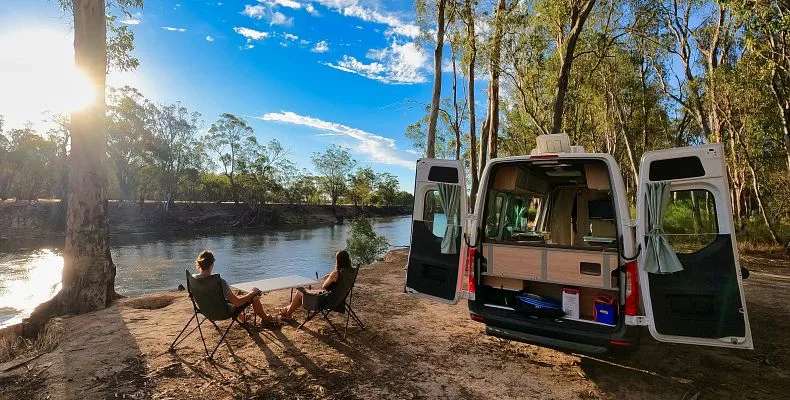
If you’ve ever considered selling up the house, buying a motorhome, and living off-grid, you’re not alone. You get to enjoy the benefits of being rent- or mortgage-free, travel the country, and meet interesting new people. Talk about living the dream! And for increasing numbers of motorhome owners, it really is a dream come true. But before you stick a ‘for sale’ sign on the front lawn or hand your landlord your notice, it’s worth delving into the nitty gritty of off-grid living.
In this helpful guide, we’ll share practical tips about how to live off the grid, including:
- What does ‘living off the grid’ mean?
- What are the benefits of living off-grid in Australia?
- How do you live off-grid in a motorhome?
- Tips for staying safe when living off the grid
What does ‘living off the grid’ mean?
Living off-grid in a motorhome means that you’re not physically connected to the grid of utilities, in particular electricity. Rather than staying in a powered campsite in a campervan park with all the utilities at your fingertips, living off-grid is when you partake in ‘free camping’ on public land. That also usually means having no direct freshwater line. In other words, you rely completely on your own supply of power and water.
What are the benefits of living off-grid in Australia?
There are many benefits to living off-grid in your motorhome. Let’s take a look at just a few:
- You’ll feel a great sense of independence and freedom This is probably one of the main reasons why many motorhomers choose to live off-grid. Being fully independent is a pretty amazing feeling. Not only can you forget about power and water bills, but you can also forget about battling traffic on the way to work each day.
- You could save money over time When you live off-grid in a motorhome, you won’t have to worry about rent or mortgage payments, rates, and home maintenance costs. Although running a motorhome will have costs associated, these are likely to be less over time.
- It is more sustainable Living off-grid means you generate your own power through a solar set-up or generator. And because of the nature of off-grid living, you’re also likely to use less water and generate less waste.
- You can drastically reduce your energy waste Living in a motorhome means you’re naturally a lot more efficient with your energy use.
- You’ll have the flexibility to live wherever and move around as you please One of the biggest decisions to make when you live off-grid is around which views you want to wake up to. Feel like heading to the snow in winter? Always wanted to explore our national parks? Want to watch the sunset from your bedroom? It’s all possible!
How do you live off-grid in a motorhome?
There are a few considerations to take into account when you’re planning to live off-grid. The main ones are having your own source of electricity and water, and your own system for dealing with waste. You’ll also need to make sure you know where you can and can’t park, and that you’re taking steps to stay safe. Let’s take a closer look at each of these.
Find an approved place to park up
Australia offers one incredible landscape after another. And it may be tempting to park up for the night in one that takes your fancy. But it pays to know that you can’t park just anywhere in your motorhome. There are different parking regulations for each state. So it’s important you familiarise yourself with the appropriate rules to ensure you are complying no matter where you choose to adventure.
This is also a consideration for longer-term parking. If your vehicle is within the size requirements, you can park your motorhome in residential areas indefinitely in some states. But, again, it is worthwhile to do your research and understand what are the local regulations around parking a motorhome.
To help, we recommend you download the thl Roadtrip app. This handy app features holiday park campsites, free campgrounds, and national park sites. You can use the app to find the nearest sites along your journey.
Choose an alternative energy source
When you’re living off-grid, you won’t be plugged into a power source. Two good alternatives are:
Generators: Generators produce both 240V AC and 12V DC power. A generator plugs into your RV and acts the same as shore power does. They are a good solution for power-hungry appliances.
Solar panels: Solar panels work by converting sunlight into direct current (DC) electricity. An inverter then converts the DC electricity into alternating current (AC) electricity to be used from your RV’s power points. In sunny Australia, solar is a very popular choice.
Try and limit the power you use
Whether you use solar or a generator for power, it’s helpful to try and be as efficient with your power as possible.
Get an extra freshwater storage tank
If you are living off-grid, especially if you’re travelling remotely, you won’t want to run out of fresh water.
Determine your showering method
Some motorhomes have hot water systems installed. Others may not. Portable solar showers or public facilities are good alternatives.
Make sure you have a waste storage tank
Disposing of your waste responsibly is an important aspect of living off-grid. Always use approved dump points.
Tips for staying safe when living off the grid
- Regularly service your motorhome.
- Store valuables safely.
- Avoid poorly lit, remote areas where possible.
- Park facing the exit.
- Carry a first aid kit and fire safety equipment.
- Stay in contact with friends or family.
Ready to live off-grid with Apollo RV Super Centre?
Living off-grid in a motorhome can be incredibly rewarding. With the right preparation, knowledge, and equipment, you can enjoy true freedom on the road.
If you’re considering making the move to off-grid living, visit Apollo RV Super Centre. Our team can help you choose the right motorhome with suitable solar, battery, and water systems for full-time off-grid travel.
Check out our range of new and ex-rental motorhomes today, or speak with one of our experts for personalised advice.
Learn more about your motorhome with our helpful how-to guides.